
At New Jersey Foot & Ankle Institute, we offer personalized care for plantar warts – including stubborn or recurring lesions. Treatment can range from carefully selected medications to advanced laser techniques, depending on the wart, its location, and each patient’s individual needs.
What are plantar warts?
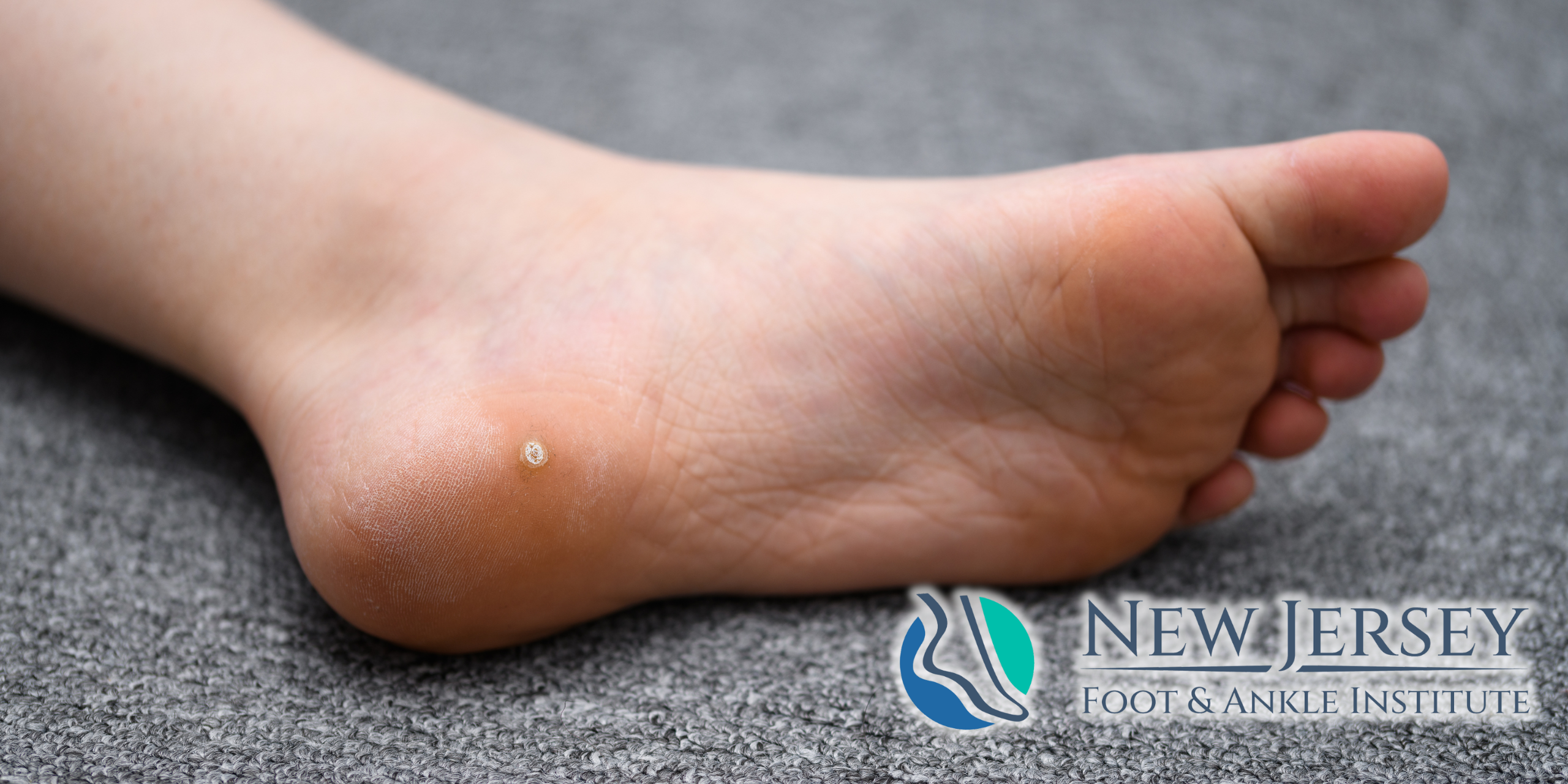
Plantar warts are caused by the human papillomavirus (HPV) and develop on the bottom of the foot. Because they grow on weight-bearing areas, pressure can push the wart inward beneath a layer of hard skin, making it feel like a painful pebble under the foot. Plantar warts may appear as a single lesion or in clusters and can sometimes be mistaken for a corn or callus.
Treatment can be tailored to the wart and the patient
There is no single treatment that is right for every plantar wart. Depending on the size, location, duration, and number of lesions, treatment may begin with carefully applied topical or in-office medications designed to break down or stimulate the body to clear the wart tissue. Thick overlying skin may also be reduced during an office visit so treatment can reach the affected area more effectively.
Advanced laser options for stubborn or recurring warts
When plantar warts are painful, persistent, or have not responded to more traditional treatments, advanced laser therapy may be an option. Laser techniques can deliver focused energy to the wart and its supporting tissue while limiting treatment to the affected area. The number of treatments needed varies, and some warts may still require a combination approach. Dr. Stawicki will recommend the option that best fits the location of the wart, your medical history, and how the lesion has responded to prior care.
If you have a painful spot on the bottom of your foot, a wart that keeps returning, or a lesion that has not improved with over-the-counter treatment, schedule an evaluation with New Jersey Foot & Ankle Institute. Early diagnosis can help distinguish a plantar wart from other skin conditions and allows us to create a treatment plan ranging from medication-based care to advanced laser techniques.
Treatment recommendations vary by patient. People with diabetes, neuropathy, poor circulation, or immune-system conditions should avoid self-treating foot lesions and should have them evaluated professionally